You are viewing United States

Why Maintaining Meat and Poultry Color and Flavor is Important for Manufacturers

Why Color Matters in Meat and Poultry Products

Many consumers base their meat and poultry buying decisions on a fresh appearance and equate appealing color with quality and freshness.1 A study on the role of color in food states that "food color affects the consumer's ability to correctly identify flavor, to form distinct flavor profiles and preferences, and dominates other flavor information sources, including labeling and taste."2

Since color is the consumer's most important cue to freshness, meat and poultry manufacturers have a challenge when it comes to maintaining a fresh appearance.3 Understanding the cause of off flavors and off-colors is crucial for manufacturers to address these challenges and determine the best solution.

What Causes Color Loss in Meat?

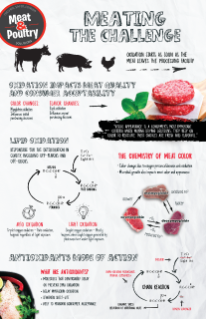
The color of meat is highly dependent on exposure to oxygen, which over time causes off-colors by a process called oxidation. 

Myoglobin is the most important protein for color in meat, which is determined by the ratios of the forms in which it is present. Stable oxymyoglobin (MbO2) imparts a bright red color that is considered a mark of freshness and is formed and maintained in an oxygen-rich environment.

Over time, continuous oxidation transforms the myoglobin into metmyoglobin (MMb+), imparting a brown color, a cue to consumers that the meat is no longer fresh. When added to fresh meat, ingredients such as acerola cherry extract (Malpighia emarginata) and other plant-derived extracts can help delay oxidation.

How Oxidation Causes Off-Flavors and Rancidity in Meat and Poultry

Meat and poultry products are an important part of the human diet, but like other food items, they are susceptible to flavor degradation.5 Consumers often choose meat and poultry based on color, but if these products do not consistently provide fresh flavor, repeat purchases may decrease. Rancidity, which arises from the oxidation of lipids, represents a significant challenge in preserving fresh and desirable flavors.  

Lipid oxidation is a chain reaction that occurs in the presence of oxygen. During lipid oxidation, unsaturated fatty acids react with oxygen to form lipid hydroperoxides, which later degrade into molecules such as aldehydes and ketones. These molecules are responsible for the off-odors and off-flavors in meat and 

How Manufacturers Can Improve Meat and Poultry Shelf Life

Maintaining the color, flavor, and overall freshness of meat and poultry products begins with managing oxidation—the primary driver behind browning, rancidity, and off‑flavors.

To address these challenges, manufacturers traditionally rely on antioxidants. These solutions fall into two broad categories: synthetic antioxidants and clean label, plant extracts.

Synthetic antioxidants, such as BHA (butylated hydroxyanisole) and BHT (butylated hydroxytoluene), have been used for decades to slow oxidation and extend shelf life in meat and poultry systems.

They are effective in stabilizing both color and flavor by interrupting free radical oxidation pathways. However, changing regulatory pressures and growing consumer preference for recognizable ingredients have led to increased scrutiny of synthetic ingredients.

Plant extracts and blends offer manufacturers a consumer-friendly option for maintaining color and flavor without relying on synthetic additives. 

Proven Oxidation Control Solutions for Meat and Poultry Color and Flavor Protection

At Kemin, our color and flavor protection solutions feature plant-derived extracts such as acerola extract, rosemary extract, and blends of rosemary and green tea extracts. These plant-derived ingredients assist meat and poultry manufacturers in delaying oxidation and preserving the fresh color, aroma, and flavor of their products, while maintaining a clean and simple label. 

Meat and Poultry Oxidation Guide

References

1. Packaged Red Meat, U.S. Mintel, 2023

2. Lawrence L. Garber Jr., Eva M. Hyatt & Richard G Starr Jr. (2000) The Effects of Food Color on Percieved Flavor, Journal of Marketing Theory and Practice, 8:4, 59-72, DOI: 10.1080/10696679.200.11501880

3. https://www.meatpoultry.com/articles/21140-meat-sells-at-first-sight

4. https://www.fsis.usda.gov/food-safety/safe-food-handling-and-preparation/food-safety-basics/color-meat-and-poultry

5. Domínguez R, Pateiro M, Gagaoua M, Barba FJ, Zhang W, Lorenzo JM. A Comprehensive Review on Lipid Oxidation in Meat and Meat Products. Antioxidants (Basel). 2019 Sep 25;8(10):429. doi: 10.3390/antiox8100429. PMID: 31557858; PMCID: PMC6827023.