You are viewing United States

Night_AI_Copilot

Can Better Sleep Improve Cognitive Performance?

Key Takeaways

  • Sleep is a critical foundation for cognitive performance, supporting memory, learning, focus, decision-making, and overall brain function.
  • Poor sleep can significantly impact daily performance, reducing productivity, concentration, well-being, and the ability to achieve daily goals.
  • Consumers increasingly recognize the connection between sleep and wellness, with most adults reporting that quality sleep helps them feel and perform at their best.
  • Better cognitive performance may begin the night before, making sleep support an important and often overlooked strategy for enhancing next-day mental performance.

Why Does Sleep Matter for Cognitive Performance?

Sleep is one of the strongest determinants of cognitive performance and brain health. We dedicate one-third of our lives to it1 and its impact go far beyond rest. Sleep influences mental health, physical health, beauty, and overall quality of life.2

Sleep is not simply a passive period of inactivity. It is a highly active biological process during which the brain helps consolidate memories, process information, and prepare for the next day.

Because of this, sleep quality can influence how people think, focus, react, learn, and perform throughout their daily lives.

When consumers think about improving cognitive performance, sleep is often overlooked. Yet it may be one of the most important foundations for how the brain functions each day.


How Does Poor Sleep Affect Daily Performance?

Low-quality sleep is associated with reduced ability to achieve daily goals3 and poorer overall health and well-being3.

The effects can extend beyond a single day – feeling sleepy can trigger effects that last 5–7 days4, including irritability, headaches, and a general sense of feeling unwell. As a result, many people start the day operating below their full mental potential. The effects of daytime sleepiness can be far-reaching, contributing to a higher risk of accidents, reduced productivity and academic performance5, and challenges in social and personal relationships that ultimately diminish quality of life.

What Do Consumers Say About Sleep and Well-Being?

Consumers recognize the importance of sleep in their daily lives.

A 2025 National Sleep Foundation poll found that 87% of adults reported that adequate sleep positively impacts their ability to achieve daily goals, while 85% said high-quality sleep improves their overall well-being.⁶

These findings reinforce a growing understanding among consumers: better sleep is closely linked to feeling and performing at their best. Sleep does not merely influence how rested people feel. It influences how well they function.

Why Are So Many Consumers Struggling with Focus and Mental Performance?

Mental wellness has become one of the most important dimensions of overall health for consumers around the world.

As modern lifestyles become increasingly demanding, many people report challenges related to focus, concentration, mental energy, and cognitive resilience.

Sleep recharge

According to global consumer research:7

  • 28% of global consumers suffer from lack of focus and concentration.
  • 39% of global consumers feel fatigue and tiredness some of the time. 

Traditionally, the nootropics market has responded to these challenges through stimulation – offering solutions designed to counteract fatigue and enhance short-term alertness.

However, few products address the body’s most important mechanism for cognitive recovery: sleep.

Could Cognitive Performance Begin at Night?

If sleep plays such an important role in focus, memory, learning, decision-making, and productivity, perhaps cognitive performance begins before the day starts.

This perspective is encouraging a broader conversation within cognitive health.

Rather than looking only at how people perform while they are awake, it is important to explore how supporting the brain during sleep may influence performance the next day.

It is a simple but powerful shift in thinking: better cognitive performance may not only start in the morning.

It may also start the night before.


make the connection - 2

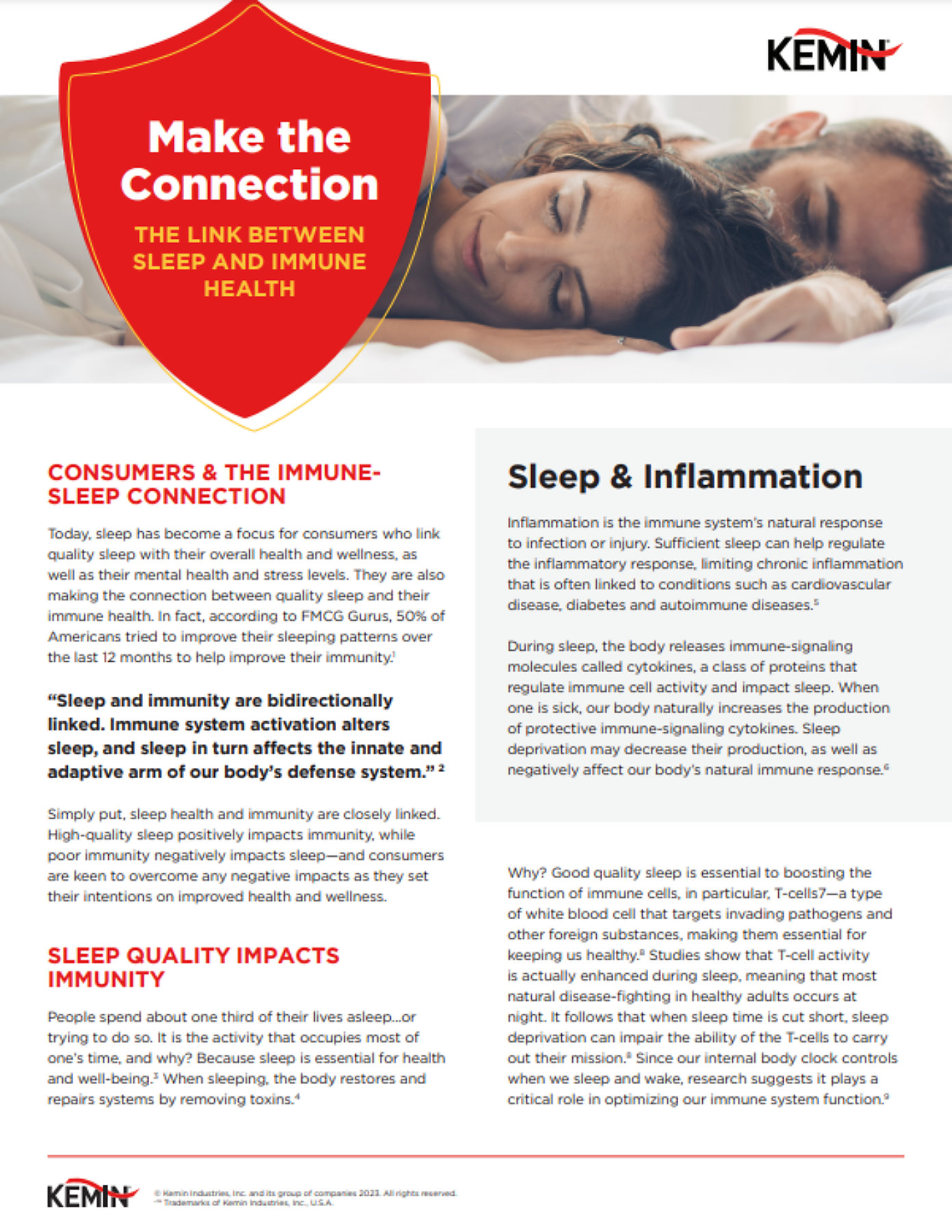
Make the Connection: The Link Between Sleep and Immune Health

sharpness mental speed - 3

Sharpness & Mental Speed: Wake up to the Post-Sleep Brain Benefits

Subscribe to our Blog

References

1 team, NeuroLaunch editorial. “Sleep Duration in a Lifetime: Unveiling the Time We Spend in Slumber.” NeuroLaunch.com, 26 Aug. 2024, neurolaunch.com/how-much-of-our-life-does-sleep-take-up/.

2 Spytska, Liana. “The Importance of Quality Sleep and Its Relationship with Physical and Mental Health: A Systematic Review.” Sleep Medicine Research, vol. 15, no. 3, 30 Sept. 2024, pp. 162–172, https://doi.org/10.17241/smr.2024.02264.

3 Shah, Arambh Sanjay, et al. “Effects of Sleep Deprivation on Physical and Mental Health Outcomes: An Umbrella Review.” American Journal of Lifestyle Medicine, 27 May 2025, https://doi.org/10.1177/15598276251346752.

4 https://www.thensf.org/wp-content/uploads/2020/03/SIA-2020-Report.pdf

5 “Excessive Sleepiness: Causes, Symptoms, and Treatments.” Sleep Foundation, 13 Oct. 2018, https://www.sleepfoundation.org/excessive-sleepiness. Accessed 15 July 2026.

6 https://www.thensf.org/wp-content/uploads/2025/03/NSF_SIA_2025-Report_final.pdf

7 FMCG GURUS | Global Report – “Cognitive Health Habits, Motivations, and Priorities in 2026” – May 2026.

8 Tubbs, A. S., Kennedy, K. E. R., Alfonso-Miller, P., Wills, C. C. A. & Grandner, M. A. A randomized, double-blind, placebo-controlled trial of a polyphenol botanical blend on sleep and daytime functioning. Int. J. Environ. Res. Public Health 18, 1–11 (2021).

9 Capasso L, De Masi L, Sirignano C, Maresca V, Basile A, Nebbioso A, Rigano D, Bontempo P. Epigallocatechin Gallate (EGCG): Pharmacological Properties, Biological Activities and Therapeutic Potential. Molecules. 2025 Feb 1;30(3):654. doi: 10.3390/molecules30030654..


Want to learn more about how sleep impacts cognitive health?