





















You are viewing Asia Pacific

How Kemin Engineers Power Global Innovation While Honoring Local Needs

When you walk into a Kemin facility—whether in Des Moines, Iowa, U.S., or halfway across the world—you’ll find something remarkably consistent: the unmistakable hum of engineering curiosity at work. It’s the sound of people who solve problems not because they have to, but because they genuinely love doing it. Behind every product launch, system upgrade, or market expansion sits a team of global engineers whose collaboration fuels Kemin’s ability to deliver safe, consistent, and innovative solutions to customers everywhere.

Among them is Caleb Spangler, Senior Process Engineer, whose work spans pilot development, scale‑up, technology transfer, and global consistency. His insights reveal what it truly takes to engineer at a worldwide scale—balancing product uniformity with the realities of regional differences.
Key Takeaways

  • Global engineering success depends on disciplined collaboration from the start.
    Kemin engineers work closely with R&D, operations, and marketing early in development to identify critical-to-quality (CTQ) parameters, ensuring ideas can scale reliably from lab concept to commercial production across regions.
  • Technology transfer is where engineering delivers the most value.
    By anticipating real-world constraints—such as temperature control, material sensitivity, and equipment limitations—engineering teams reduce startup risk and accelerate commercialization.
  • Strong project execution is built on communication and flexibility.
    Rather than prescribing single solutions, Kemin Engineering evaluates options, maintains feedback loops, and adapts as business needs evolve—building trust with internal stakeholders through transparency on cost, scope, and schedule.
  • Global consistency is achieved by balancing standards with local realities.
    While core engineering standards and quality expectations remain nonnegotiable, teams allow flexibility for regional differences in utilities, regulations, materials, and practices. This ensures consistent product quality worldwide.

How to Take Engineering from Lab Concept to Commercial Reality

Scaling a new idea from a benchtop experiment to a fully operational manufacturing process is no small feat. Spangler explains that pilot‑to‑production transitions begin long before equipment is ordered or materials are sourced.

“Kemin Engineering works hand‑in‑hand with Research and Development (R&D) scientists, process experts, operations teams, and marketing groups to identify the critical-to-quality (CTQ) parameters,” Spangler says. Their goal is to clarify the physical, chemical, and operational parameters that must be met for a product to succeed on a global scale.

From understanding how temperature and pressure affect a molecule’s extraction, to measuring the impact of mixer selection on blend homogeneity, engineers troubleshoot every variable. These decisions carry enormous weight—they determine everything from product efficacy to shelf life.

“These are just a few of the considerations that must be taken into account during the development of a single new finished good,” Spangler says. With more than 500 finished goods produced around the world, the engineering organization must be both broad in reach and specialized in execution.

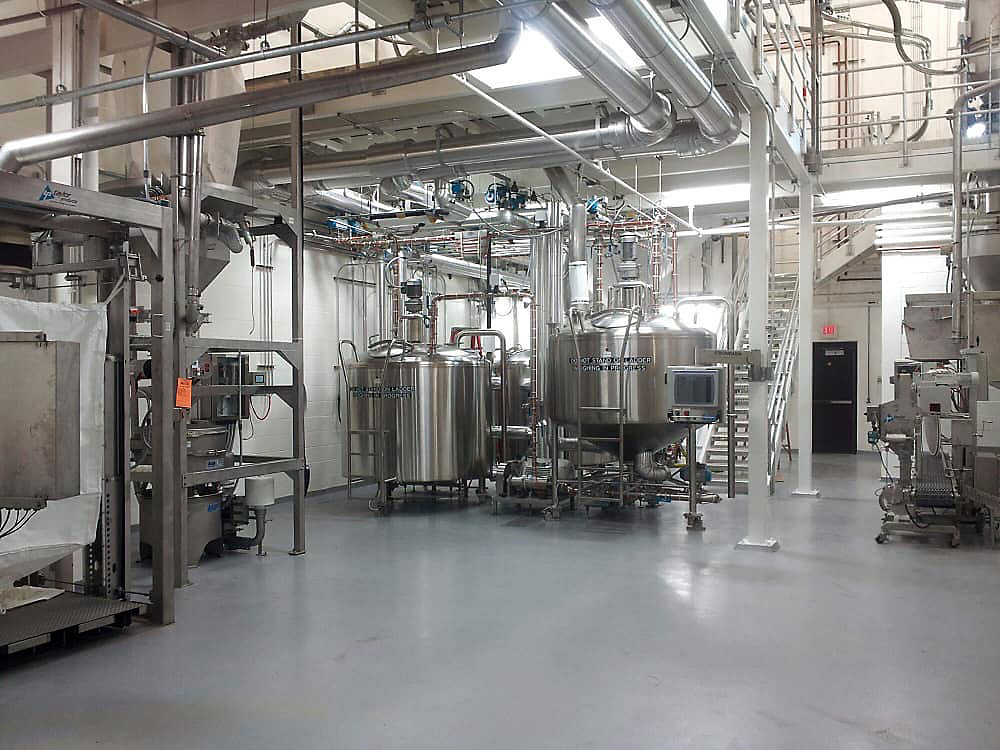
encapsulation-facility

Project Management That Thrives on Communication and Flexibility

While engineering often involves technical precision, successful global project execution depends just as much on flexibility and communication.

As a service group, Kemin Engineering supports internal customers by evaluating the cost, schedule, and feasibility of various project paths. Rather than prescribing a single solution, these engineers create informed options.

“Engineering works closely with internal stakeholders and external design consultants to develop a scope that meets business goals,” says Matthew Madison, Kemin’s Global Construction Manager. “Throughout this process, we maintain a clear feedback loop that communicates the cost and schedule as the project progresses. This is typically achieved through regular steering meetings and structured progress reports, which help ensure alignment and informed decision-making by all stakeholders.”

But even the best‑laid plans evolve. Project scopes shift. Internal needs change. Market conditions evolve. What ensures success is the trust built between engineering and the business units they support.

When Technology Transfer Meets Real‑World Constraints

Technology transfer is where design theory collides with operational reality. One example involves manufacturing a spray-dried product, where liquid must be heated to a specific temperature —without denaturing the molecule structure.

Traditional heat exchangers weren’t up to the task.

The engineering team, partnering with R&D and operations, implemented a specific heat exchanger that achieved the required temperature rise without compromising flow or molecule integrity. Even better, the system performed beyond expectations during commercial startup, requiring only minor fine-tuning.

This is what technology transfer looks like at its best: expertise from multiple regions, disciplines, and teams combining to lower the risk at startup and accelerate commercialization. By solving these challenges before startup, Kemin engineers help ensure customers receive high‑quality products faster, with greater consistency and confidence.

How does Kemin Engineering Ensure Global Consistency with Local Realities?

While Kemin maintains a global engineering standard, no two regions operate identically. “Each region will have its own particulars,” Spangler says. Utilities, regulatory expectations, raw material availability, climate, and local expertise all shape how processes are implemented.

The engineering team works with local experts to determine impacts on cost, process parameters, and material selection, but they prioritize consistency and quality.

“Our approach is to focus on maintaining consistency in meeting critical project and business objectives, while allowing sufficient flexibility to work effectively within local conditions and established industry practices,” Madison says. “We support this balance through a set of core documents that highlight standards and best practices and define the expectations we want to maintain across all sites.” These standards provide consistency where it matters most, while remaining flexible enough to accommodate local suppliers, materials, construction methods, and regulatory requirements. All teams operate by ensuring one unwavering non‑negotiable: product quality. 

Engineering Expertise that Works for You

At Kemin, engineering is more than solving technical problems—it’s about enabling innovation to succeed anywhere in the world without compromise. By combining global standards with deep local knowledge, Kemin engineers help ensure products are manufactured safely, consistently, and at scale, in any region. This disciplined yet flexible approach allows ideas to move from concept to commercial reality with confidence, delivering reliable, high‑quality solutions that customers can trust today and as their needs evolve.

Contact Us